 Southeastern PA
 Call UsSoutheastern PACall Us


Spring has sprung in Chester County, and with it comes a crucial window for property owners: Property Tax Appeal season! If you own property, now's the time to pay attention, because Annual Property Tax Appeals can only be filed from May 1st through the first business day in August each year. This is your opportunity to review your assessment and ensure it accurately reflects your property's value.
Property taxes are a significant source of revenue for our county, municipalities, and school districts, directly funding essential services like public safety, education, and human services. If you believe your property's assessment isn't fair, Pennsylvania law gives you the right to appeal.
Did you know Chester County hasn’t had a countywide property reassessment since 1998? That’s right—your property's value for tax purposes is likely still based on market conditions from over two decades ago. Unless you’ve added new construction or significant improvements that triggered an interim assessment, your tax assessment might be seriously out of step with today’s market.
The last full reassessment became effective in 1998. Since then, property values have shifted dramatically due to inflation, changing neighborhoods, and broader market trends—but your fundamental assessment might remain unchanged.
Even if you've recently built a new structure or made significant improvements that led to an interim assessment, these new values can still be challenged. This is because those interim adjustments are calculated using the existing (and often outdated) assessment methodology. If you feel your assessment doesn’t reflect your property’s actual value in today's market, you have the right to challenge it.
Simply put, your assessment is the value Chester County assigns to your property for tax purposes, used to calculate your tax bill alongside the millage rate set by various local authorities.
An interim assessment happens when you make certain improvements that increase your property's value, like building an addition or a new pool. These adjustments are usually effective the month after completion, and you'll receive a notice detailing the change.
If you don't agree with your property's assessment or the effective date of an interim assessment, you have the right to appeal to the Chester County Board of Assessment Appeals.
There are two main types of appeals:
There's a processing fee for each appeal (check the county website for current amounts), payable to the Chester County Treasurer. You'll need to obtain specific appeal forms by calling the Assessment Office or visiting their website – remember they need to be printed and mailed, not faxed or emailed.
At the appeal hearing, you'll have the chance to present information supporting your opinion of value, such as recent appraisals or sales data for similar properties. The Board will then determine a fair market value for your property.
If you're not satisfied with the Board's decision, you can take your appeal to the Court of Common Pleas within 30 days. For details on that process, you'd contact the Chester County Law Library or the Prothonotary's Office.
Have Questions About Your Property Assessment or Considering an Appeal?
Navigating the property tax appeal process can feel overwhelming, but you don't have to go it alone. While Trago Realty cannot guarantee specific results for any appeal, we're here to help you understand your property's market value in today’s Chester County landscape.
We'd be happy to talk through your situation with you on a one-on-one basis, review your assessment, and point out any potential red flags or opportunities.
Call Trago Realty today for a personalized conversation about your property's assessment!
Disclaimer: All property tax and assessment information is based on publicly available sources, including the Chester County Assessment Office (Chesco.org), the Pennsylvania State Tax Equalization Board (STEB), and the West Goshen Township’s 2022 Comprehensive Annual Financial Report. This information is for informational purposes only and should not be construed as legal, financial, or real estate advice. Individual circumstances vary, and real estate decisions should be based on professional guidance tailored to your specific situation. Please contact Trago Realty or your real estate agent to discuss your particular situation and/or needs.

April is recognized as National Fair Housing Month—a time to reflect on the ideals of fairness and equal access to housing. At the time this blog post was written in 2025, federally, there are seven protected classes under the Fair Housing Act (US Dept. of HUD: https://www.hud.gov/helping-americans/fair-housing-act-overview): race, color, national origin, religion, sex (including gender identity and sexual orientation), familial status, and disability.
In Pennsylvania, the Pennsylvania Human Relations Act (PHRA) extends protections even further, covering up to 12 classes, including (PA Dept of Community & Economic Development Fair Housing In PA: https://dced.pa.gov/housing-and-development/fair-housing/):
One area that may deserve more exploration is age. Under current Pennsylvania law, individuals under the age of 40 may not be protected from housing discrimination based solely on age. This raises an interesting question:
Should adults aged 18 and older be protected under state law in the same way those 40 and older are?
Especially when it comes to housing access for college students and young renters, this question might become even more relevant.
Municipalities such as West Chester Borough—home to West Chester University—enforce policies like student rental permitting. While such policies may be intended to maintain neighborhood balance or control density, they might also create certain unintended consequences that disproportionately affect student renters and the broader rental market.
For example:
Of course, not all municipalities enforce these policies in the same way, and not all students experience housing insecurity. But in some markets, the cumulative effect may be driving up costs while limiting options for both tenants and property owners.
While much of the national conversation around student loan debt focuses on tuition, it may be worth considering how rising housing costs—especially in college towns—may also be contributing to the student debt burden. In municipalities with restricted student housing options or limited permit availability, rental prices for student-eligible properties can become inflated due to high demand and constrained supply.
When landlords are able to charge a premium for properties with student rental permits, it’s possible that students are absorbing those higher costs—often with financial aid, federal student loans or private student loans. In these scenarios, students aren’t just borrowing to pay for books and classes; they may also be borrowing to afford rent that’s been elevated by municipal regulation or market distortion.
This pattern could be one of several factors that contribute to the ongoing student loan crisis:
While more data is needed to draw direct correlations, it’s worth examining whether housing policies that limit student access to rentals are inadvertently encouraging greater reliance on debt—and whether that reliance might be quietly exacerbating the student loan crisis.
Lawmakers in Pennsylvania have proposed pieces of legislation that may help to address some of these housing challenges for students.
View Memo →
Introduced by Rep. Susan Helm (R-104), HB 809 proposed limiting the authority of local governments to prohibit the occupation of a dwelling by students or unrelated individuals. The bill suggests that:
Helm noted that municipalities may have valid concerns about health, safety, or quality of life—but targeting individuals based on their student status or relationship structure may not be the most equitable solution.
This proposal might offer a more consistent, statewide approach to housing policy while still allowing municipalities to address legitimate issues through neutral standards.
View Memo →
Introduced by Rep. Joe Ciresi (D-146), HB 121 aims to support student renters by requiring:
The idea here is that when students are equipped with practical knowledge, they may be more prepared to identify unsafe housing conditions or unfair treatment. If implemented effectively, this could contribute to better outcomes for both student renters and landlords.
From a broader perspective, policies that limit who can live where—based on age, student status, and/or family structure—may deserve deeper scrutiny. Students are often legal adults, yet they may encounter barriers to housing access that older adults do not.
Likewise, property owners who wish to rent to students might face unique restrictions that affect the value or use of their real estate. In some cases, this could alter market dynamics in ways that might not benefit renters, landlords, or long-term residents.
Perhaps there’s room for policy adjustments that better balance community interests with individual rights and economic opportunity.
A Question of Perspective: Applying the Fair Housing Lens
Consider this: if you were to say the statement listed below:
And into that blank you inserted any one of the other federally protected classes—race, color, national origin, religion, sex (including gender identity and sexual orientation), familial status, or disability—it would likely be immediately recognized as a discriminatory housing practice.
When a municipality or a landlord places restrictions specifically targeting "students", it's worth reflecting on whether this practice, while perhaps not directly analogous to discrimination based on those protected characteristics, similarly limits housing access for a specific group of adults based on their status. Viewing the policy through the lens of the Fair Housing Act's fundamental principles of equal access might lead to a different perspective on policies like student rental permitting.
National Fair Housing Month gives us an opportunity to reflect on what fair access really means. Some questions worth asking:
These issues may not have simple answers. But asking the questions, encouraging dialogue, and supporting thoughtful legislation might be a good place to start.
• https://www.tragorealty.com/#subscribe
This blog post is intended as an opinion piece and does not constitute legal advice. Readers are encouraged to explore the resources of the Department of Housing and Urban Development ("HUD") and Pennsylvania Human Relations Commission, speak with a real estate and/or housing attorney, or contact your local elected officials for further guidance on tenant rights and housing regulations.
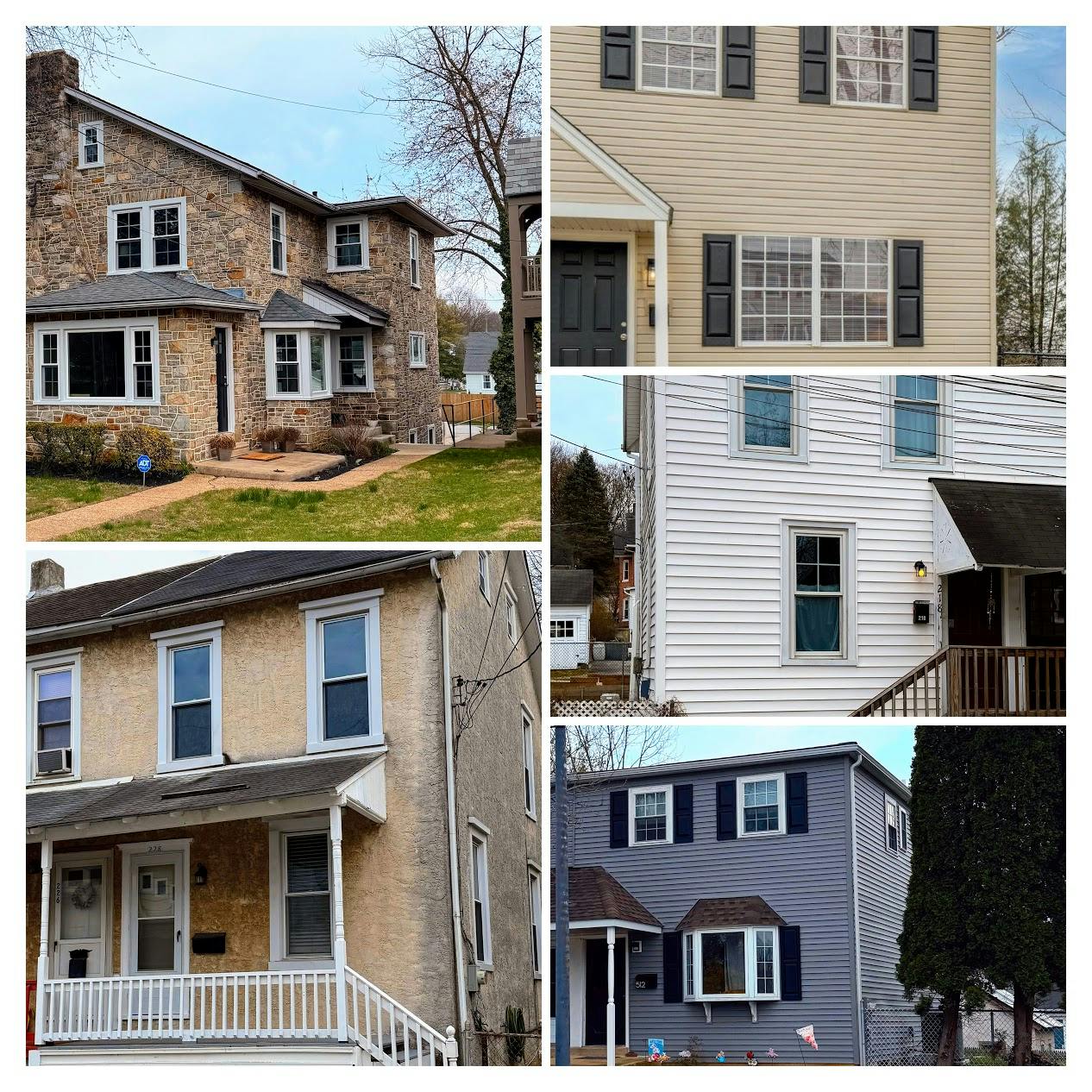
The old adage “Location, Location, Location” is a fundamental truth in real estate. Of course it would be, right? After all home’s location is fixed—it doesn’t change.
In this case, all of the properties analyzed are within Downingtown Borough, meaning their location is relatively the same. However, location alone doesn’t determine price. Condition is the key variable, and as the sales below illustrate, it can cause significant differences in price—even between nearly identical homes.
Two twin homes, just 0.1 miles apart, sold at noticeably different prices, from what I can tell due to condition.
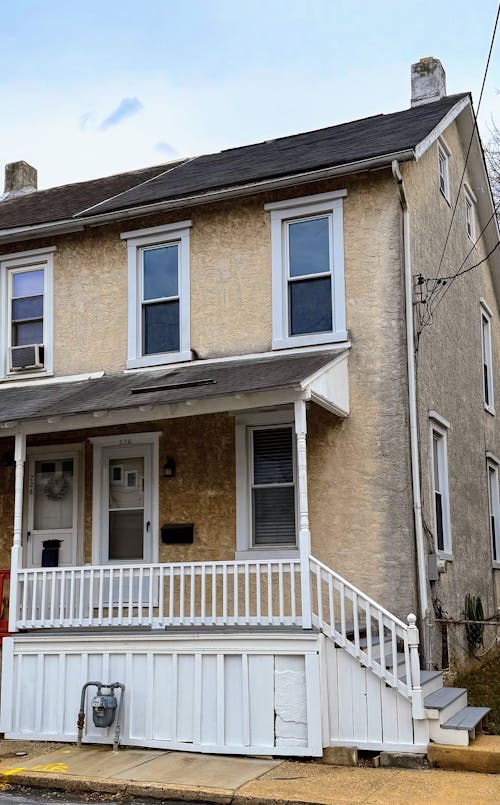
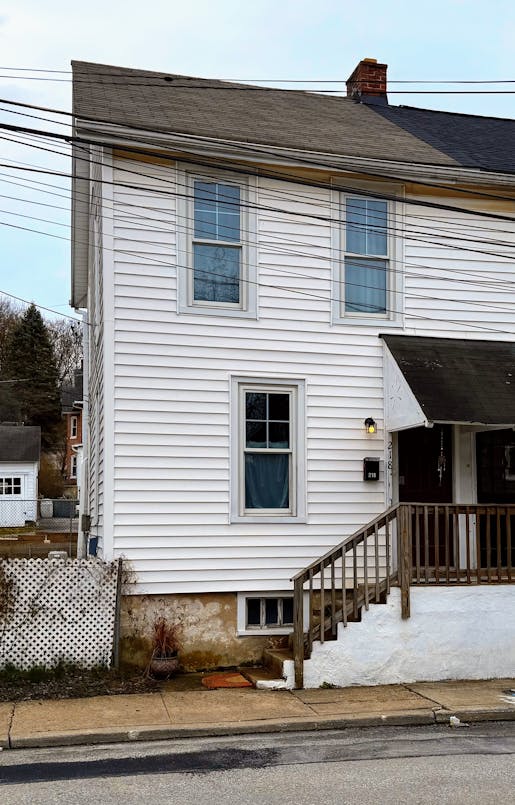
Both homes offered similar layouts and locations, yet 218 William St. commanded $38,000 more simply because it required fewer immediate repairs.
Two identical twin homes on Grant Ave—just 210 feet apart—show the financial impact of condition on pricing.
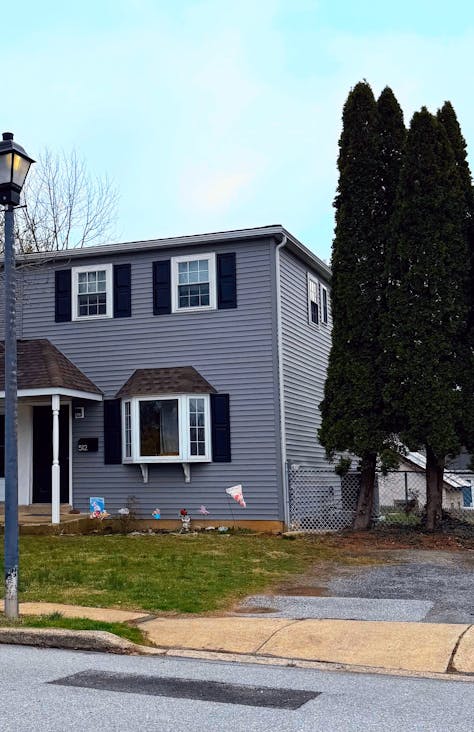
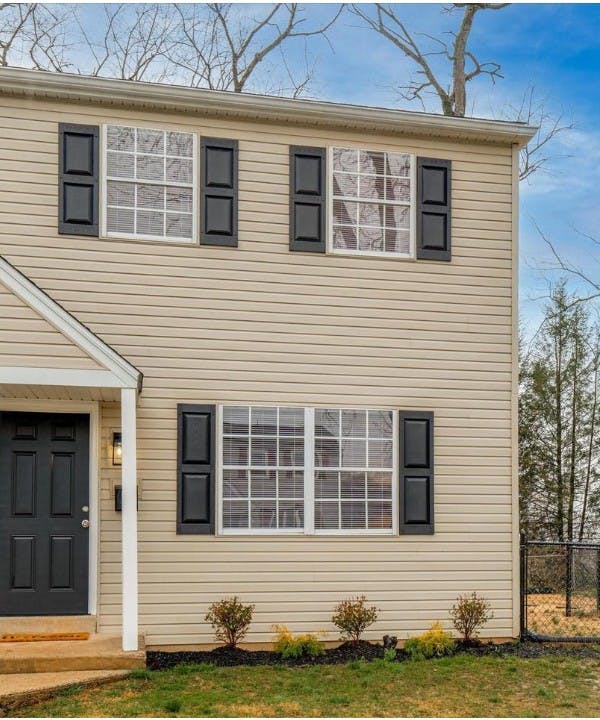
Despite having the same layout, 523 Grant Ave sold for $124,000 more because it was fully renovated, offering buyers a turn-key home with updates.
This property sold twice in under a year, proving how improvements directly impact market value.
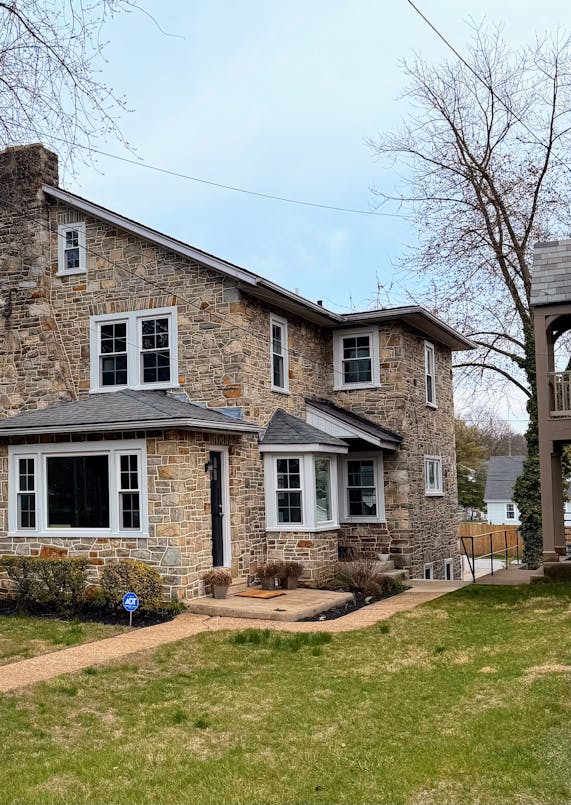
After undergoing renovations—including an added bedroom, half bathroom, and upgraded finishes—the property sold for $169,500 more in just seven months.
Every home in this analysis shares the same fundamental factor: location. However, it seems evident that prices vary based on condition. While location establishes the baseline for desirability, condition can significantly influence pricing.
Each home and situation is unique. If you're considering selling, reach out to one of our agents to discuss how, or if, your home could benefit from repairs and updates before listing.
• https://www.tragorealty.com/#subscribe
Disclaimer:
The information provided is not guaranteed, nor does the broker warrant the accuracy of the data. Results are not guaranteed, as market conditions, economic factors, interest rates, and inventory levels all play a role in the successful sale of a home. This blog post shall not be construed as a broker opinion of value or a comparative market analysis. Any statements regarding home values, pricing influences, or market trends are for informational, and entertainment, purposes only and should not be relied upon as financial, legal, or real estate advice. Buyers and sellers should consult with a licensed real estate professional for guidance specific to their situation.

Entering the realm of real estate can feel like stepping into a whirlwind, especially when deciphering signs that hold promises of opportunities and dreams. In Pennsylvania, real estate Sellers and Landlords grapple with a unique challenge—multiple telephone numbers and names crammed onto a single sign that happens to be in front of their listing. Let's delve into this practice and explore why simplicity plays a crucial role in effective marketing.
In the dynamic landscape of real estate, the inclusion of personal branding raises important considerations. While personal identity and brand recognition are valuable, they should not overshadow the core objective of effectively marketing and transacting real estate properties. Striking a balance between personal branding and compliance with legal requirements is essential to maintain professionalism and trust within the industry.
In a competitive real estate market, clarity and accessibility are paramount. By prioritizing simplicity and clear communication, we aim to make the selling and leasing experience as straightforward and rewarding as possible for our clients. Say goodbye to confusion and hello to a more efficient way of connecting buyers and tenants with your property.
Disclaimer:
The content provided in this blog post is for informational and entertainment purposes only. It should not be construed as Real Estate, Legal, Accounting, Financial, Insurance, and/or Construction advice. Each individual situation is unique, and readers are encouraged to consult the respective specialist for their specific needs.
While efforts have been made to ensure the accuracy of the information presented, we do not guarantee its accuracy. All information was collected from sources deemed to be reliable; however, we do not warrant the accuracy of that information. Readers are advised to conduct their own research and verification before making any decisions or taking actions based on the content of this blog post.
https://tragorealty.com/

If I were to ask you who is the McDonald’s of real estate, what company comes to mind? Great, I agree! There is no right or wrong answer, other than the answer that comes to mind.
When it comes to real estate, the appeal of brand recognition can sometimes distract from essential considerations when choosing a licensee to represent your interests effectively. If you're unsure about the unique value proposition of the licensee or brokerage you've interviewed, whether it's boutique or franchised, you might not be making a fully informed decision. Asking yourself if there's something you might be overlooking can be the key to making the best choice for yourself.
If you’re signing an agency contract with a real estate licensee with brand recognition as a key part of your decision making, you could be making a mistake!
This isn’t a blog post that’s going to trash franchised real estate brokerages. After all, a big chunk of my career was spent with the largest residential real estate brokerage by sales production and agent count in Chester County, which of course happened to be a franchise.
My intent is only to educate people that real estate franchises are vastly different from other franchised businesses, like restaurants. Sure, the Restaurant and Real Estate franchisors share similarities in the sense that both provide systems and processes to the franchisees, but the things that are provided to the customer or client can be totally different.
You see, if you as a consumer go to a McDonald’s in California, it’s not going to be a whole lot different than a McDonald’s here in Pennsylvania. That’s because the consistency of quality control is supposed to flow through to the customer.
However, if you go to two real estate agents from the same franchise office here in Pennsylvania, you’re likely to get two totally different approaches and outcomes. That’s because the systems and processes delivered to the real estate franchisees are for their customers . . . THE REAL ESTATE AGENTS! Although some of these systems and processes are designed to equip the agents with the knowledge and skills they need to help their clients, one of the main focuses of the franchisee is to recruit, attract and retain as many licensees as possible. For that reason, the experience of the clients of each individual licensee varies from agent to agent, even within the same real estate brokerage.
Just like any career, people-are-people and we all possess different skill-sets, characteristics and experiences. Or more importantly two totally different levels of skill-sets and competencies. Perfect example is one agent may have 10 days of experience, whereas another may have 10 years of experience. The point being that not all practitioners are equal in ability and knowledge.
The fact of the matter is, that we, boutique brokerages and franchise brokerages, in a lot of ways are more alike than different.
SIMILARITIES:
While both boutique and national franchise brokerages share similarities, there are distinct advantages to choosing a boutique brokerage. These include a more personalized approach, greater flexibility, and a unique atmosphere that fosters closer relationships between agents and clients. Prospective clients are encouraged to weigh these benefits when deciding which brokerage aligns best with their needs and preferences.